


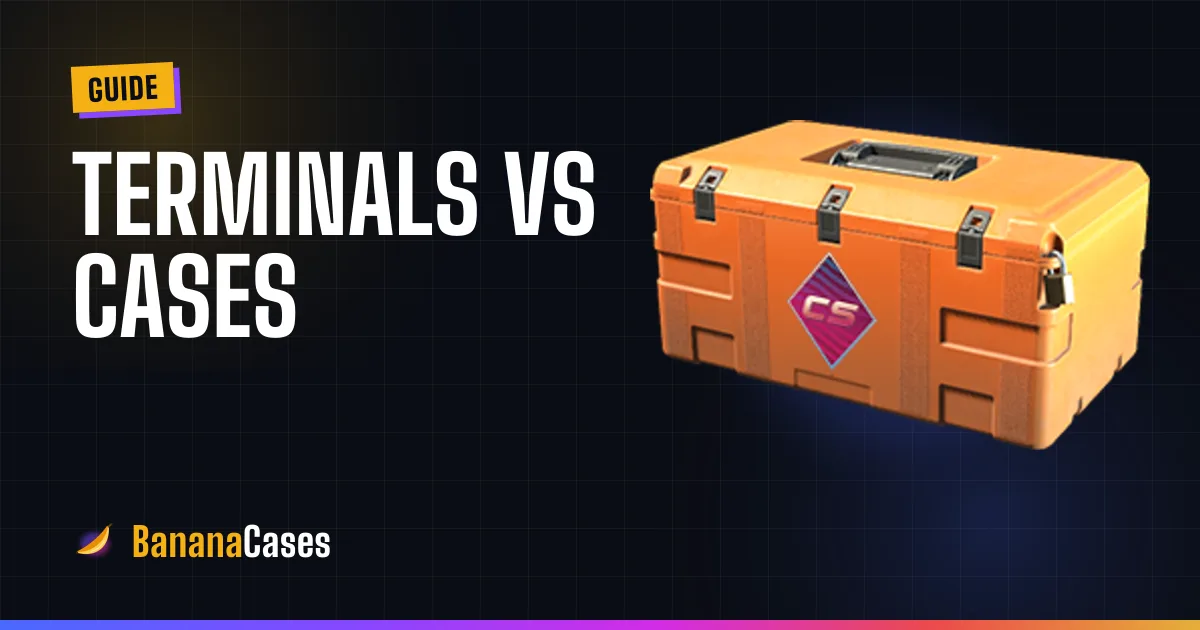
The last new weapon case was the Fever Case in 2025. Both new containers Valve has released since then are Terminals. They look like cases in your inventory, but they work very differently: there is no key, you see the item before you pay, and you can walk away with nothing. Here is how they work and how to decide whether to open one or sell it.
What a Terminal is
A Terminal is a container that sells you skins from one collection through a series of offers. Two exist so far:
| Terminal | In the drop pool since | Contents |
|---|---|---|
| Sealed Genesis Terminal | September 2025 | 17 weapon skins, no rare special items |
| Sealed Dead Hand Terminal | 11–12 March 2026 | 17 community-made weapon skins, plus 22 gloves as rare items (7 Sport, 7 Specialist, 8 Driver) |
You get Terminals as a weekly drop on Prime accounts, or you can buy sealed ones from other players on the Steam Community Market and third-party marketplaces.
How the offers work
Opening a Terminal costs nothing. Instead of rolling one item, it shows you offers one at a time:
- Each offer shows a specific skin with its wear (float), whether it is StatTrak, and a price set by Valve.
- You either accept (the price comes out of your Steam Wallet and the skin is yours) or decline to see the next offer.
- You get up to five offers. Decline all five and the Terminal self-destructs, with no item and no refund.
Each offer is drawn on its own, so declining a cheap Mil-Spec offer does not make the next one better. Skins you buy follow the normal Steam trade hold before you can trade or sell them.
Terminal vs case: the real differences
| Classic case | Terminal | |
|---|---|---|
| To open | Case plus a key | Free |
| What you pay for | The key, before you see the item | Only an offer you choose to accept |
| What you get | Always one random item | One item you picked, or nothing |
| Odds | Published by Valve (0.26% for a knife or gloves) | Not published by Valve |
| Can it go to waste? | No | Yes, if you skip all five offers |
The biggest change is that you never pay blind. With a case, the key is spent before the reel stops. With a Terminal, you know exactly what you are buying and for how much.
The catch is the odds. Valve published drop rates for cases in 2017, and our CS2 case database shows them for every case. For Terminals there is no official breakdown. Some guides assume the same rarity split as cases, but that is a guess, not a published number. Treat any “Terminal odds” you see as unconfirmed.
Should you open it or sell it?
A sealed Terminal has its own market price, so opening one has a cost even though Valve charges nothing for it. A simple way to decide:
- Check what the Terminal sells for. If the sealed price is more than you would happily spend on a gamble, selling it is the safe choice.
- Compare each offer to the market. Before you accept, look up the same skin, wear and StatTrak status on the Steam Market or a third-party marketplace. Accept only if Valve’s price is lower than what the skin sells for.
- Do not chase the gloves. On Dead Hand, gloves are the rare item. Skipping decent offers while hoping for gloves usually ends with five declines and an empty slot.
Terminals and case sites
Case opening sites work differently again: they sell their own cases and set their own odds. If you want to compare how sites handle odds, bonuses and withdrawals, our CS2 case opening site rankings cover it. Whatever you open, set a budget first. Our responsible gambling page has help lines if it stops being fun.